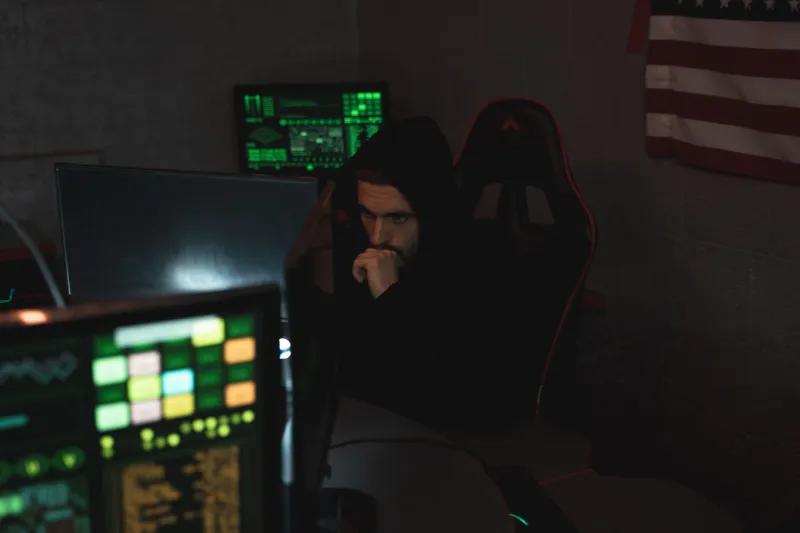
The Human Vulnerability: How Security Team Burnout Quietly Dismantles Your Defenses

When organizations conduct post-incident reviews, the conversation almost always gravitates toward technical failures — a misconfigured firewall, an unpatched endpoint, a phishing email that slipped through the filters. Rarely does the debrief surface the analyst who had been on their third consecutive twelve-hour shift, or the SOC manager who hadn't taken a vacation day in eight months. Yet the evidence is increasingly clear: the human cost of modern security work is not a soft HR concern. It is an operational risk with direct consequences for detection accuracy, response time, and organizational resilience.
According to research published by the Ponemon Institute and corroborated by multiple workforce studies, a significant majority of cybersecurity professionals in the United States report experiencing burnout. More troubling, a substantial portion of those individuals indicate that their mental and physical fatigue has directly affected their ability to perform critical job functions. In a field where the margin for error is measured in minutes — and sometimes seconds — that admission should register as a five-alarm warning for every CISO in the country.
Why Security Work Is Structurally Exhausting
The nature of security operations creates conditions that would tax even the most resilient professionals. SOC analysts routinely process thousands of alerts per shift, the overwhelming majority of which are false positives. The cognitive load required to maintain vigilance across that volume of noise — while simultaneously knowing that a single missed signal could precipitate a significant breach — is not sustainable over months and years.
Compounding this is the perpetual asymmetry of the work itself. Defenders must be right every time. Attackers only need to succeed once. That psychological dynamic, reinforced daily, erodes even experienced analysts' sense of agency and efficacy. When professionals begin to feel that their efforts are structurally insufficient regardless of their performance, disengagement follows — and disengaged analysts miss things.
Understaffing accelerates the spiral. The global cybersecurity workforce gap remains in the hundreds of thousands in the United States alone, according to ISC2's annual workforce study. Teams that are already stretched thin absorb departures poorly. When a burned-out analyst leaves, their responsibilities don't disappear — they redistribute across colleagues who are already operating near their limits. The cycle is self-reinforcing and, if left unaddressed, self-accelerating.
What Attackers Gain From Your Team's Exhaustion
This is not merely a workforce management problem. Threat actors — particularly sophisticated, persistent ones — understand that human fatigue is exploitable. Intrusion campaigns frequently involve extended dwell times, during which adversaries move laterally and escalate privileges in slow, deliberate increments specifically designed to avoid triggering automated thresholds. A well-rested, engaged analyst reviewing behavioral anomalies at the end of a normalized shift is far more likely to identify these patterns than one who is cognitively depleted and working through their second cup of coffee at 3 a.m.
There is also the matter of procedural degradation. Burned-out teams cut corners — not out of negligence, but out of necessity. Runbooks get abbreviated. Escalation paths get bypassed. Documentation suffers. These shortcuts create inconsistencies that degrade institutional knowledge and make it harder for even capable analysts to perform effectively. Over time, the organization's actual security posture diverges significantly from what its policies and procedures claim on paper.
Measuring the Operational Impact
Security leaders who want to make the case internally for addressing burnout need to frame it in operational terms their stakeholders will recognize. Consider the following metrics:
- Mean Time to Detect (MTTD): Fatigued analysts take longer to correlate events and escalate potential incidents. Even modest increases in MTTD translate to longer adversary dwell times and greater potential damage.
- False Positive Triage Rate: Burned-out teams are more likely to dismiss ambiguous alerts without thorough investigation — precisely the behavior sophisticated attackers depend on.
- Analyst Turnover: Each departure carries a replacement cost estimated between 50% and 200% of annual salary when recruiting, onboarding, and lost institutional knowledge are factored in. That figure does not account for the security gaps that open during transition periods.
- Incident Recurrence: Teams operating under chronic stress are less likely to complete thorough root cause analyses, which means the same vulnerabilities often resurface.
Practical Interventions That Actually Move the Needle
Addressing burnout in security teams requires more than wellness programs and pizza Fridays. The interventions that produce measurable outcomes tend to be structural and operational in nature.
Rationalize the alert pipeline. Alert fatigue is not inevitable — it is the result of poorly tuned detection systems. Investing time in reducing false positive rates, implementing better correlation rules, and tiering alerts by confidence and severity allows analysts to direct their attention where it matters. Every alert that a machine can reliably classify and route appropriately is cognitive load removed from a human being.
Enforce rotation and recovery. On-call schedules that provide genuine recovery time between high-intensity periods are not a luxury — they are an operational requirement. Organizations that treat human attention as infinitely renewable will eventually learn the hard way that it is not.
Build depth through documentation. Comprehensive, maintained runbooks reduce the cognitive burden on individual analysts and make teams more resilient to turnover. When institutional knowledge lives in people's heads rather than in documented procedures, every departure is a capability loss.
Invest in analyst development. One of the most consistent findings in security workforce research is that professionals who feel they are growing in their roles are significantly less likely to disengage. Structured training pathways, access to platforms and certifications, and opportunities to develop specializations give analysts a sense of forward motion that counteracts the grinding quality of day-to-day SOC work.
Create psychological safety around escalation. Analysts who fear being second-guessed for escalating an alert that turns out to be benign will eventually stop escalating ambiguous signals. That is a detection failure waiting to happen. Leadership culture that rewards thorough investigation over speed-to-dismissal produces better security outcomes.
The Strategic Imperative
Every security team is, at its core, a collection of human beings making judgment calls under pressure, often with incomplete information and constrained resources. The technology they use — the SIEMs, the EDR platforms, the threat intelligence feeds — amplifies their capabilities, but it does not replace them. An organization that invests heavily in its security stack while neglecting the people who operate it is building an impressive instrument that no one is fit to play.
The most sophisticated attack your organization will ever face will likely be executed by adversaries who understand your technology stack reasonably well. What they are counting on, increasingly, is that the people monitoring that stack are too tired to catch them. Closing that gap is not a human resources function. It is a security imperative — and it belongs on the agenda alongside every other control in your defensive framework.